
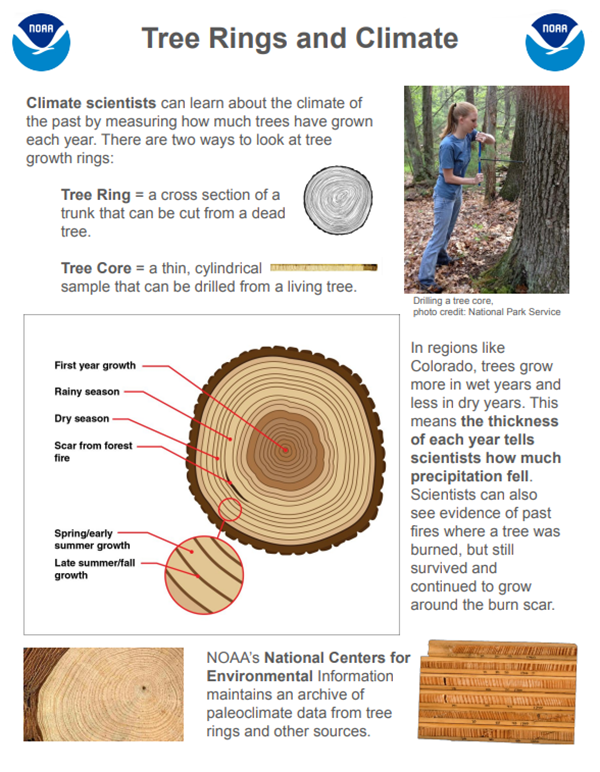
Tree Rings and Climate
Printable information about how tree rings can teach us about the climate of the past
Tree Rings and Climate Read More »
Printable information about how tree rings can teach us about the climate of the past
Tree Rings and Climate Read More »
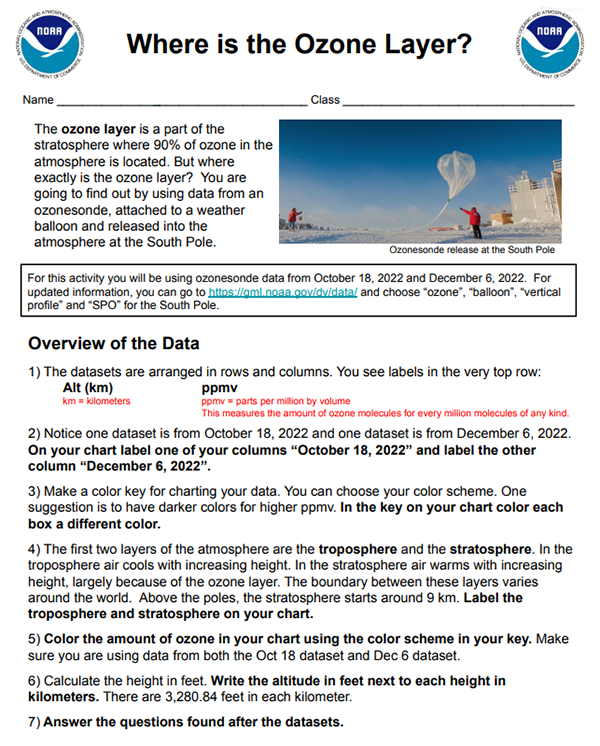
Students will look at ozone data collected by NOAA at the South Pole with ozonesondes. Students will use ozone data to determine where the ozone layer is in the atmosphere.
Where is the Ozone Layer? Read More »

One mission of NOAA’s Global Monitoring Laboratory is to monitor the amount of ozone in the stratosphere. Every year in October there is a dramatic decrease of ozone over the South Pole. This is called the Ozone Hole. Today you will look at ozone data from a Dobson Ozone Spectrometer. NOAA has Dobson instruments at many locations around the world. You will be looking at data from the Dobson located at the South Pole.

Students will look at carbon dioxide data from NOAA’s observatory on the top of Mauna Loa, Hawaii.
CO2 by the Numbers Read More »
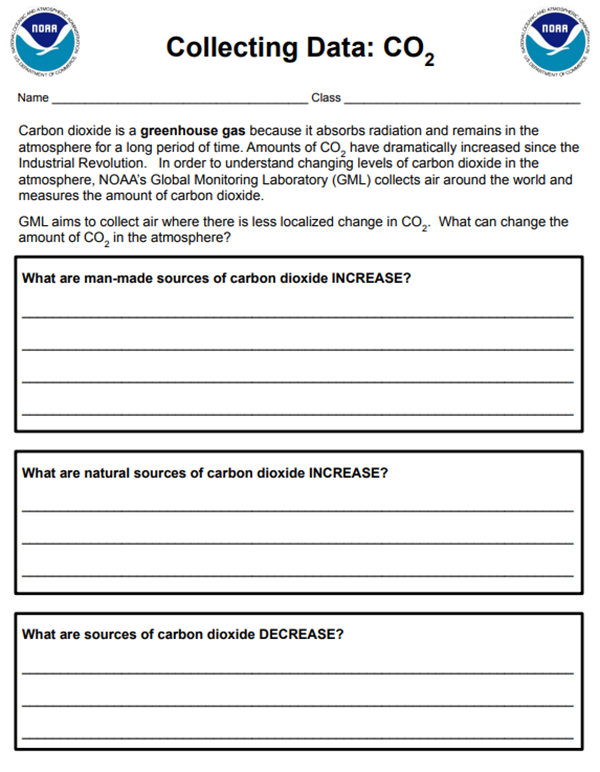
Students will think about how NOAA measures carbon dioxide
Collecting Data: CO2 Read More »

How has the climate changed in your state? Has the average temperature increased or decreased? How about record highs or record lows? Does your state receive more or less precipitation than 50 years ago? 100 years ago?
Climate of Your State Read More »

Students learn about the layers of the atmosphere
Layers of the Atmosphere Read More »

Meet NOAA’s Space Weather Prediction Center (SWPC) Team Member Kiley Gray, Software Engineer. Learn what a day in her life is like and how she got to where she is.
Meet Our Team: Software Engineer Kiley Read More »

Meet NOAA’s Space Weather Prediction Center (SWPC) Team Member Shawn Dahl, Forecaster. Learn what a day in his life is like and how he got to where he is.
Meet Our Team: Space Weather Forecaster Shawn Dahl Read More »
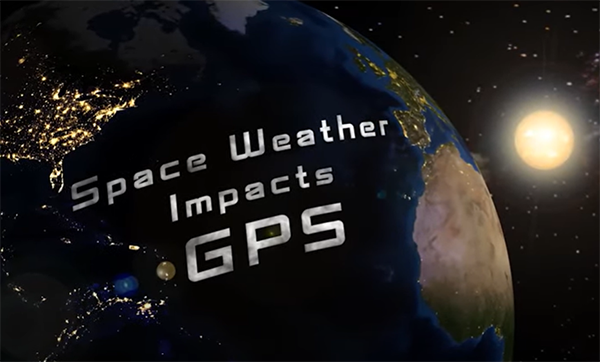
GPS has changed society. Multiple applications: oil drilling, aviation, precision agriculture, surveying, military operations, emergency response, recreational, and so much more depend on the continuous availability of this vital satellite navigation system. These critical applications rely not only on navigational services provided by GPS, but high accuracy timing as well. Space weather storms can interfere with the high accuracy and availability of GPS leading to erroneous information or even complete loss of GPS capabilities. NOAA’s Space Weather Prediction Center provides critical information on potential interference to GPS applications to end-users around the world.
Space Weather Impacts: GPS Read More »