

Ask a Scientist: Why Is Arctic Ice Melting?
NOAA’s Physical Sciences Laboratory (PSL) Scientist Kelly Mahoney explains why floods happen and the different types of floods.
Ask a Scientist: Why Is Arctic Ice Melting? Read More »
NOAA’s Physical Sciences Laboratory (PSL) Scientist Kelly Mahoney explains why floods happen and the different types of floods.
Ask a Scientist: Why Is Arctic Ice Melting? Read More »

NOAA’s Physical Sciences Laboratory (PSL) Scientist Andy Hoell explains how he studies climate and how it can be important.
Ask a Scientist: How Do You Study Climate? Read More »
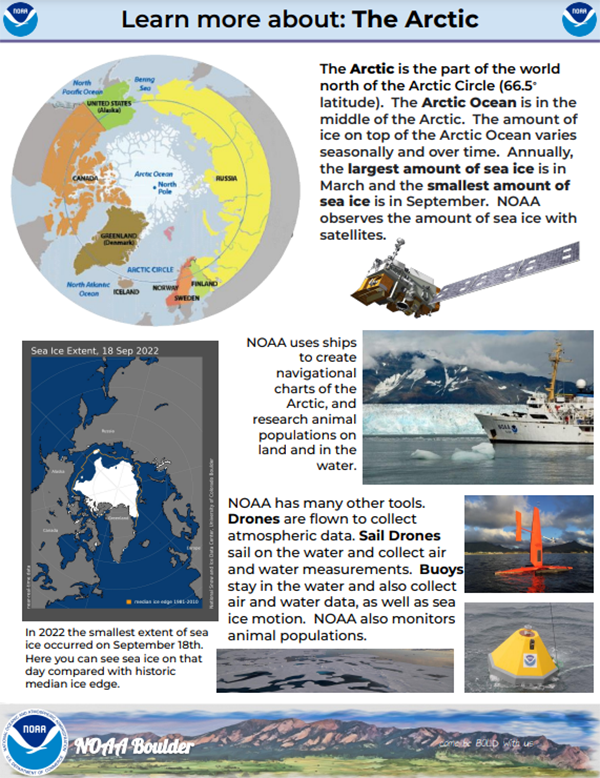
Printable information about the Arctic and MOSAiC, the year long international science mission to learn about the atmosphere, ice, and ocean in the Arctic
Learn More About the Arctic Read More »

Printable information about ozone, the ozone layer, and ozone depletion
Learn More About Ozone Read More »
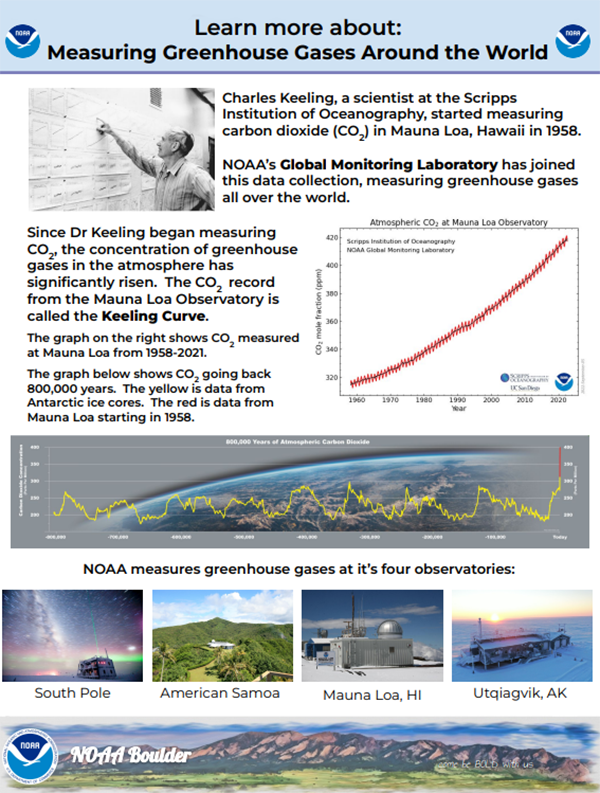
Printable information about greenhouse gases and how NOAA’s Global Monitoring Laboratory collects greenhouse gas data from all over the world.
Learn More About Measuring Greenhouse Gases Read More »
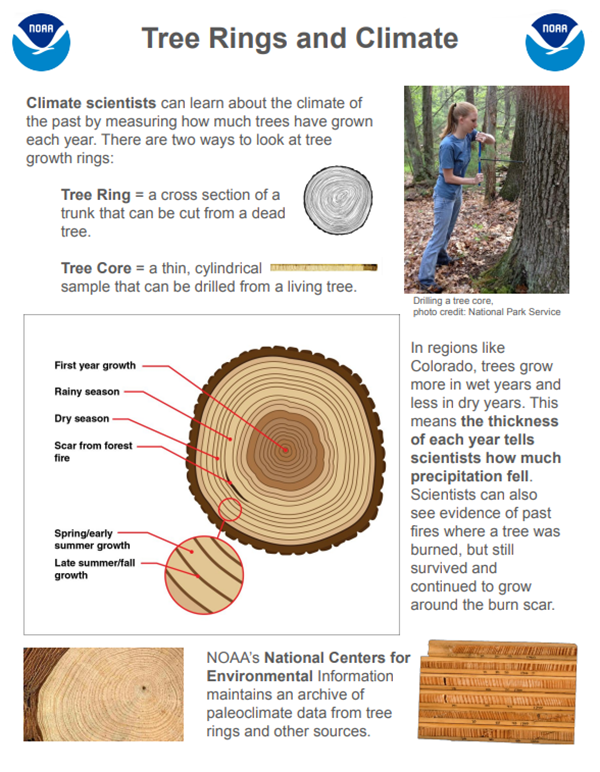
Printable information about how tree rings can teach us about the climate of the past
Tree Rings and Climate Read More »

Students learn about the layers of the atmosphere
Layers of the Atmosphere Read More »

Students learn about droughts and floods and create their own PSA.
Communicating About Droughts and Floods Read More »
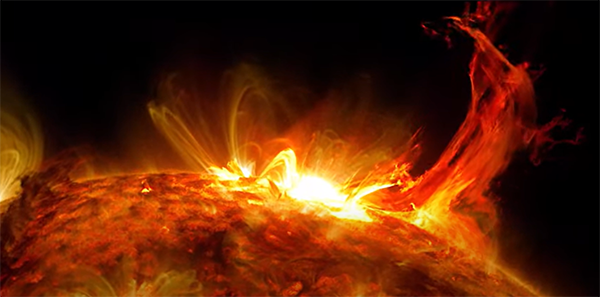
Just like we experience weather on Earth, there’s weather in space! The Sun may look very constant and quiet from Earth, but it’s constantly spewing out a stream of particles called the solar wind. Space weather is activity on the Sun that can affect Earth and interact with our technology.
5 Things: Space Weather Read More »
